
May 12, 2026 · 6 min
When embellished art becomes a tribute.
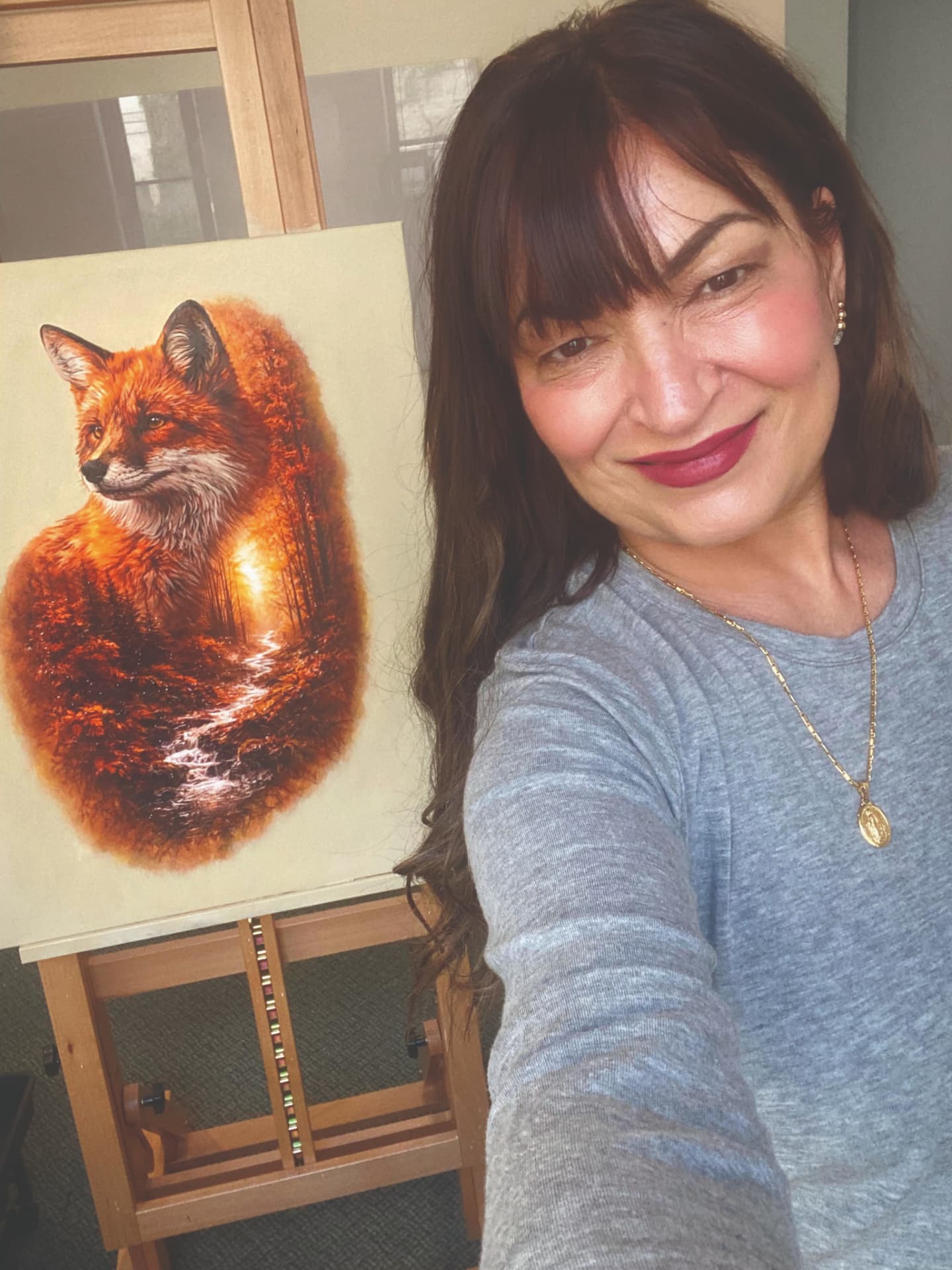
An artist's perspective on paintings that carry a person's story — not just their likeness.
I know what has been entrusted to me.
When a family sends me their loved one's ashes, I am very aware of what is arriving in my studio. These aren't simply materials I'm going to use in a painting. This is someone. And someone who is deeply loved.
I understand some of that from my own life, too. I'm a widow. I've lived through the complicated, deeply personal process of grief and I understand the need to hold onto someone's memory — and sometimes to have something tangible that helps us do that.
I believe the people we love continue to live through the memories and stories we carry and share. I also believe art can be part of that. I've experienced how healing art can be, sometimes in ways we never expected it to be.
That's part of why this work has become so personal and meaningful to me.
When someone's ashes arrive in my studio, I think about the person on the other side of that package. I know what it means to love someone who is no longer physically here. And I know how much trust it takes to place something so irreplaceable in someone else's hands.
I think about that every time I receive a family's ashes, and it shapes how I care for them while they're with me.
They are stored securely and respectfully. I keep everything carefully identified and separate. I don't use the same brushes between families when working with cremated remains. Anything I don't use is carefully returned.
Even the things a family may never see matter to me. Because I know they matter.
There is a lot of trust involved in sending a part of someone you love to an artist. I don't take that lightly.
I feel the same way about privacy. I may have created something I'm incredibly proud of, but it isn't automatically mine to share. The story belongs to the family. I would never want someone to unexpectedly see something so personal posted publicly without having given me permission.
When I'm embellishing an existing piece, I'm thinking about how to incorporate the ashes in a way that feels intentional and honors the artwork. I want them to truly become part of the piece.
A commissioned painting is a little different. That's where I get to know someone through the people who loved them. I want to hear the stories.
What did they love? Where did they feel most like themselves? Was there a place they always returned to? An animal they felt connected to? A color they always wore? Something they said all the time that still makes everyone laugh?
Sometimes it's the smallest detail that stays with me.
Then I begin thinking about how those pieces can live within the painting.
Symbolism is very important in my work. A bird doesn't necessarily have to be just a bird. A particular flower, the direction of the light, the number of objects in a scene, a color appearing in one small place — those choices can hold pieces of someone's story.
I set up a commissioned piece very intentionally. Not because I believe one painting could ever capture an entire person. It can't. But it can hold clues. Little pieces of them that their family recognizes.
And then there is the moment when I actually incorporate their ashes into the paint. That part of the process is very quiet for me. I know I'm handling something that can never be replaced. I know that somewhere, a family is trusting me with someone extraordinarily important to them.
So I slow down. I pay attention. And I treat that person with the same dignity I would hope someone would offer my own family.
When the painting eventually leaves my studio, I want the family to receive more than something beautiful. I want them to be able to look closely and discover their person within it. And I want them to know that long before the painting came home, their loved one was cared for here.